Buenos Aires Guide - part 1: Getting from the Airport in Buenos Aires
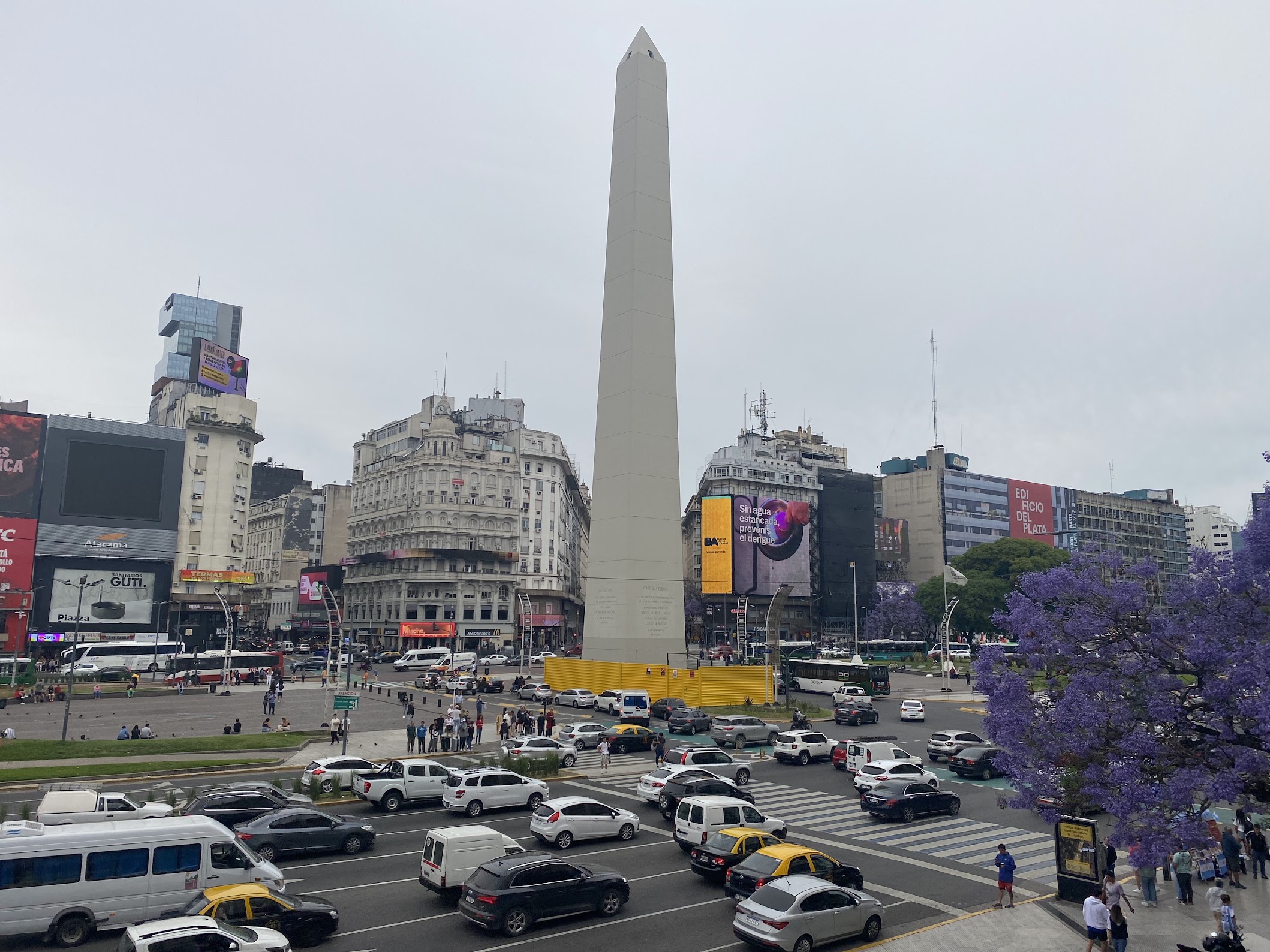
Congratulations, you survived your flight! So, what's next? Whatever your plans are, you'll need money, a bus card, and a SIM card with internet access.
I did my research before landing in Buenos Aires, but things change quickly, and I was a bit surprised by a few realities.
Here's what we planned for our first 24 hours in Argentina:
1. Survive the flight
2. Get to the hostel and take a shower after 24 hours of travel
3. Drop off our huge backpacks
4. Head out to the city to buy SIM cards
5. Exchange money
6. Battle jet lag
Airport situation in BA
Double check which airport your flight uses. Our international flight from São Paulo landed at the AEP (small and centrally located by the shore), while our domestic flight to Bariloche departed from the sprawling EZE (massive and situated on the outskirts, about 35 minutes from the tourist center of BA without traffic).
We found our bags without a hitch (not thanks to my nervous AirTag tracking at every chance as I imagine). Coming from a wealthy European country and looking very much like eager hikers, immigration was a breeze. However, we did have to present our accommodation booking for the night.
Getting from AEP by Bus
Like all airports, taxis are abundant outside. Too luxurious for two backpackers - let's take the bus!
There's a catch, though. You need a SUBE card to hop on a bus. It’s a chip card available at kiosks for 1700 ARP. Not a huge sum, but here's the snag – the airport kiosks wouldn’t sell us a SUBE card when we tried to pay with a card. Only cash was accepted. We had dollars, but only crisp, well-ironed 100-dollar bills (what?), which were useless in this scenario.
Unexpected Side Quest: Getting Money at AEP
You're probably aware of Argentina's currency situation. If not let me offer you a short AI summary:
ChatGPT: Over the past 20 years, Argentina has faced recurring financial crises, including hyperinflation and debt defaults. Hyperinflation peaked at over 3,000% in 1989 and reached 54% in 2019. This has led to high living costs for locals, unpredictable prices for tourists and difficulties in accessing cash due to high inflation and limited bank credit.
Just use an ATM, right? Easier said than done. Before leaving, I read that ATMs often run out of money, malfunction, or charge exorbitant fees along with the official exchange rate. Sadly, I found all this to be true.
There are two ATMs at the airport. One was out of order, and the other charged a hefty 20% fee plus 5000 ARP. Using my Maestro card, I withdrew 20000 ARP, leaving 9000 ARP in fees behind—costing me 35 Euros [November 2024]. Quite a rip-off—I'd expect at least 35000 ARP for that amount.
We bought the SUBE card and tried topping it up at a kiosk (let's call it kiosk #1). The attendant (likely annoyed) directed us to another kiosk (#2) to use their machine for topping up. Unfortunately, the machine was out of service.
Funny story: The machine was full of money, awaiting someone to empty it. I suppose going from 100 ARP to 1000 ARP for the same bus ride over a few years challenges machinery specs.
Kiosk #2 couldn’t manually top up our cards, but the friendly lady called the guy at kiosk #1, who could do it manually. After another trek through the arrival hall, our cards were topped up. I wonder how many people just give up. I was this close to booking an Uber, but my wonderful boyfriend persisted.
Bus Ride
Public transport in Buenos Aires is impressive. The number of buses is staggering, and Google Maps does wonders for navigation, knowing all stations and routes.
Research your first bus ride while you still have internet access, as you can't buy or activate a SIM card at AEP (I was aware of the eSIMs for international travel but found them too expensive. It is probably a good choice if you visit for a week or so.)There was Wi-Fi, but it didn't work for us. Download an offline map, check the bus number you need. GPS will work without internet, but you should know your route.
As an introverted person without fluent any Spanish skills, I was nervous. After boarding the bus, you must tell the driver your destination. He'll quickly input it on his computer, and then you can tap your card. You can see the fare and your remaining balance.
We were unaware of this, and the driver (likely annoyed), charged us the highest fare possible (around 5000 ARP for a short 10-minute ride) as answer to your confused silence stares after getting on the bus. Lesson learned!
Funny Story: We often ran out of money on our SUBE card. Rides got pricey (8000 ARP sometimes wasn't enough for a day’s travel), and some kiosks with "old software" wouldn't top up more than 10000 ARP. Twice, we were stranded in villages with no way to top up. The bus driver didn’t accept cash. Both times, we asked people at the bus stop to pay for us, reimbursing them with cash. Topping up the card with mobile app is sadly reserved only for those with Argentine ID.